Managing multiple distributed branches presents coordination and standardization challenges. Ruijie Enterprise Multi-Branch Network Solution enables simplified architecture with centralized management while reducing operating expenditure.




↓70%
OPEX Cost Reduction
Overview
Frequent changes in network architecture, low O&M efficiency, and increasing construction costs are major challenges for multi-branch campus networks.
Ruijie implements the One Device for One Network (ODON) solution and hierarchical AC technologies, ensuring convenient and reliable centralized network management while significantly reducing operating expenditure.
A large number of branch/store nodes scattered at different locations.
Cable trays overloaded, construction and cabling costs are high.
Numerous information points, difficult for expansion and scaling.
Traditional architecture complicated, O&M of multi-vendor devices difficult.
Network architecture changes lead to complicated O&M workflows.
Benefits
Our One Device One Network approach eliminates complexity while maximizing efficiency and control across all your branch locations.

deployment
A large one-tier architecture, with one device serving the entire campus, reducing deployment points by 60%.

CAPEX
Reduced deployment points and simplified cabling, lowering construction costs by up to 40% per location.

zero-touch
Automatic loop prevention on remote modules, planning after deployment, and zero-touch provisioning.

centralized
Centralized policy delivery, enabling unified management and easy O&M across all branch locations.
Ruijie Enterprise Multi-Branch Network Solution is designed for enterprises with multiple branches. The headquarters can leverage a core device that integrates switching, wireless, routing, and basic security protection functions, enabling centralized management of branches. Characterized by simplified architecture, low construction costs, and easy management, this solution facilitates efficient operations and sustainable development for enterprises.
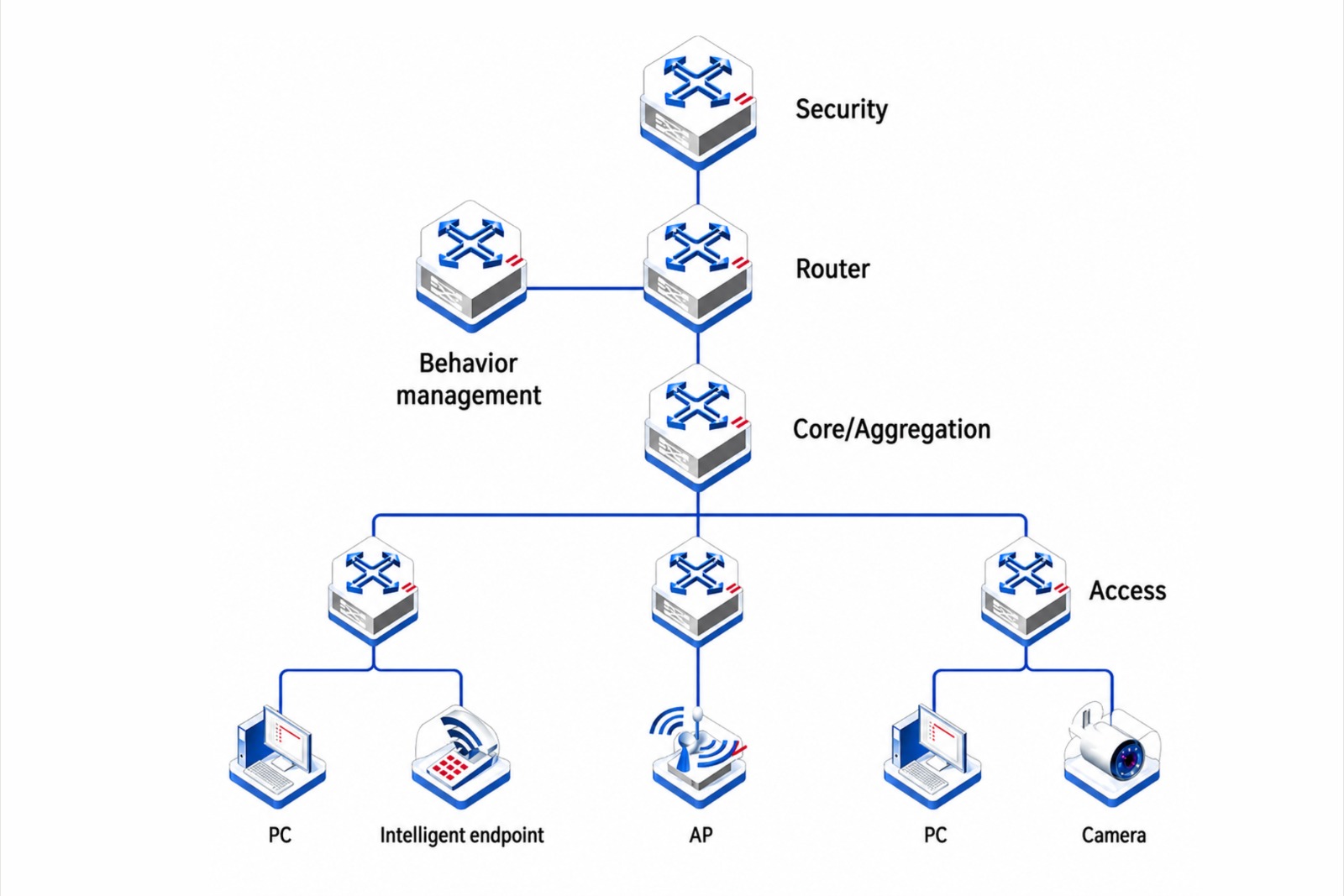
Complex architecture: Multiple tiers and device types
Complicated planning: Loop prevention and routing design
Intricate policies: Policies scattered across multiple types of devices
Integrated switch
Incorporating switching, wireless, routing and basic security functions
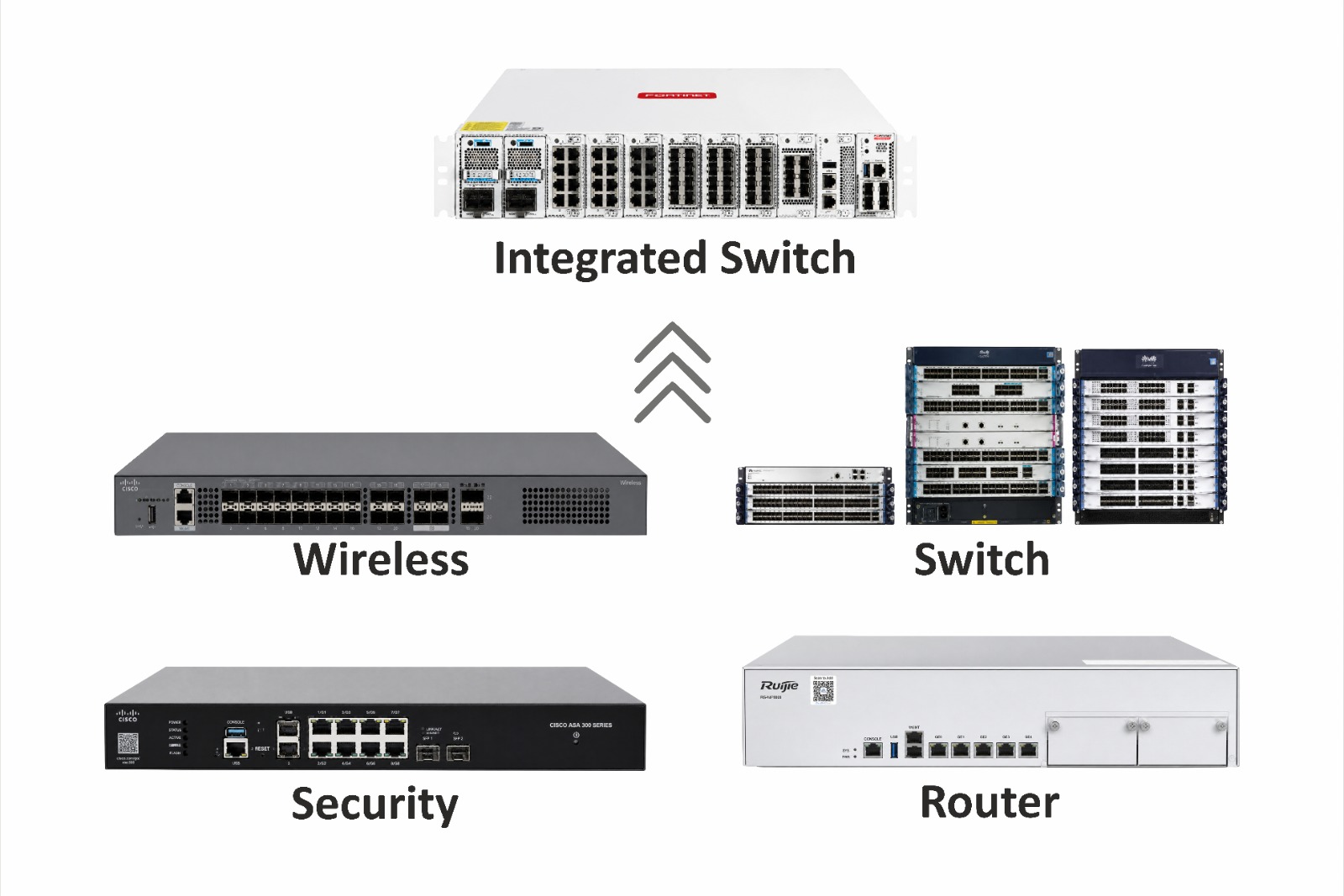
Simplified architecture: A large one-tier architecture, with one device serving the entire campus
Easy planning: Automatic loop prevention on remote modules, planning after deployment, and zero-touch provisioning and replacement
Unified policy management: Centralized policy delivery and unified management